

Delivering Energy Security at Speed: A Global Perspective on Flexible LNG Infrastructure
Delivering Energy Security at Speed: A Global Perspective on Flexible LNG Infrastructure
As global LNG supply continues to expand, driven by growth in the United States, and other key producing regions, the challenge facing many countries is no longer access to gas, but how quickly it can be imported, regasified, and integrated into domestic energy systems.
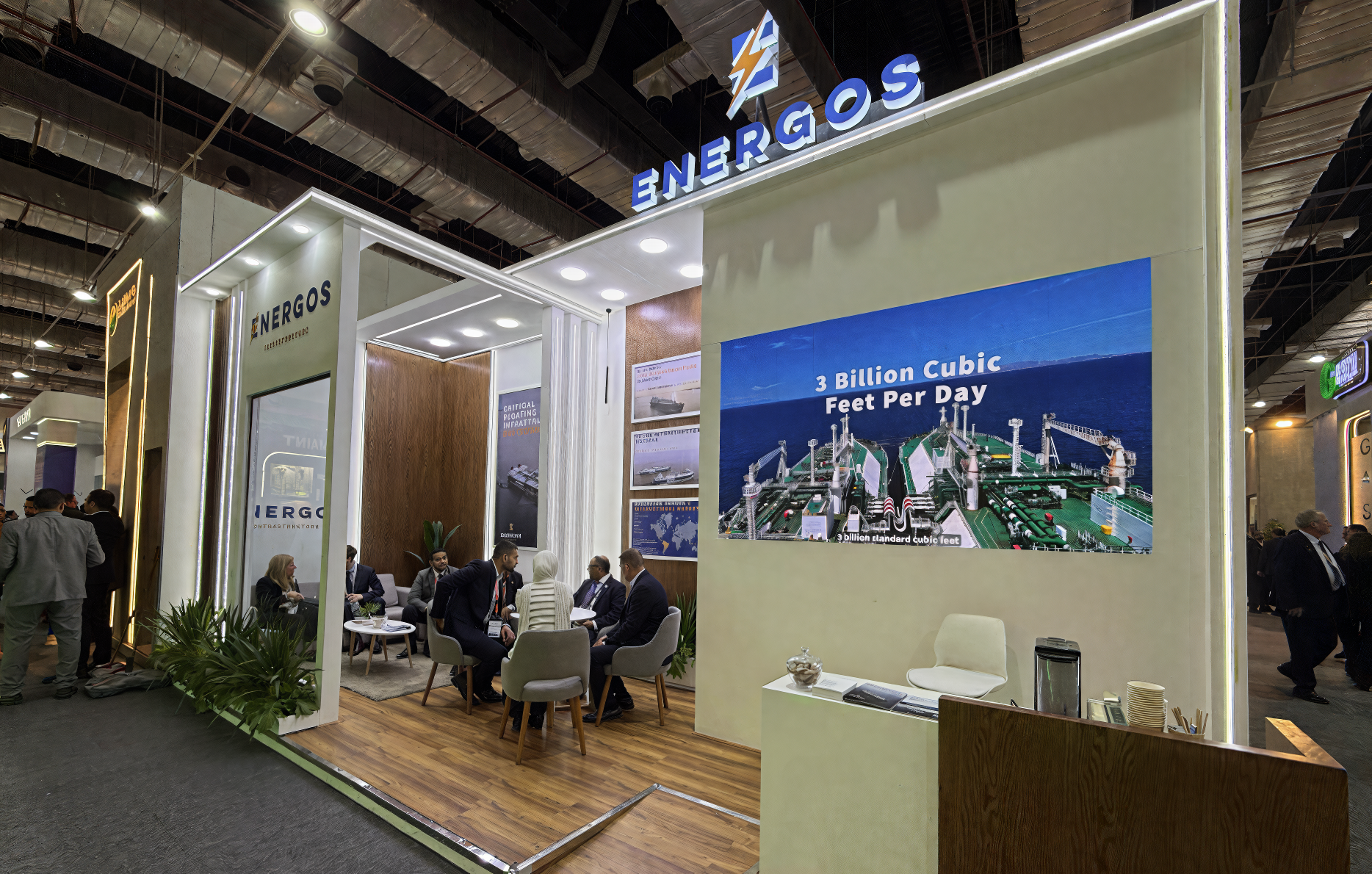
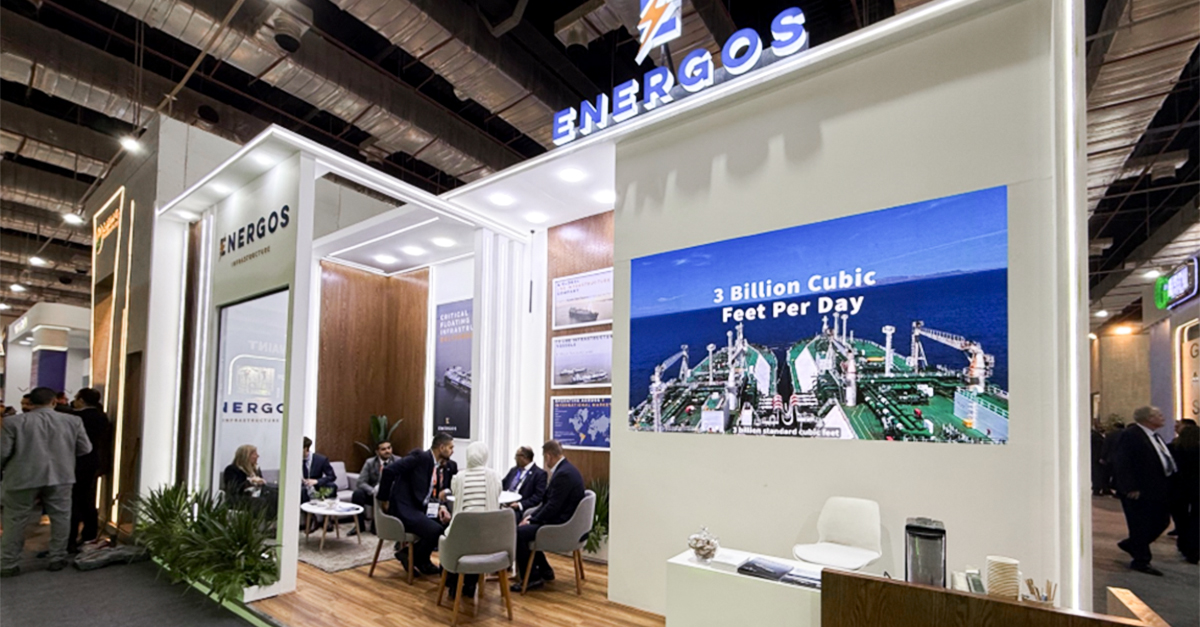
At a recent industry panel, Energos Infrastructure CEO Arthur Regan highlighted how this shift is redefining energy security, and why flexible, rapidly deployable infrastructure is becoming central to national energy strategies.
A Structural Shift in Energy Security
Geopolitical disruption and evolving demand patterns have accelerated a move away from single-source dependency toward diversified, resilient supply frameworks. Governments are increasingly prioritizing solutions that can be deployed quickly, scaled efficiently, and adapted to changing market conditions.
“The world will have more LNG supply. The question is how countries regasify it,” Regan noted. “Onshore terminals can take years and require significant capital. Floating solutions offer a faster, more flexible alternative.”
Today, approximately 55 floating storage and regasification units (FSRUs) are in operation globally, a figure expected to grow significantly over the coming decade as more countries seek to access LNG without long lead times or major upfront investment.
Unlocking Speed, Flexibility, and Access
FSRUs are uniquely positioned to bridge the gap between global LNG supply and local energy demand. Their ability to be deployed in months rather than years allows countries to respond rapidly to supply disruptions, demand growth, or structural changes in their energy mix.
For coastal nations in particular, floating infrastructure provides immediate access to global LNG markets, unlocking energy supply without the need for permanent onshore facilities.
“Countries are no longer willing to rely on a single source of supply,” Regan said. “FSRUs make LNG accessible to any coastal market, providing both flexibility and security.”
Egypt: A Case Study in Rapid Deployment
The role of floating LNG infrastructure in enabling energy security at speed is clearly illustrated by Energos’ recent work in Egypt.
Faced with a widening gap between domestic gas production and demand, the Egyptian government moved quickly to secure additional supply. Energos responded by deploying four FSRUs within an unprecedented timeframe.
“In just three months, we deployed and commissioned four FSRUs, delivering approximately 2.7 billion standard cubic feet per day,” Regan explained. “That now represents around 35% of Egypt’s natural gas supply.”
The scale and speed of execution highlight the practical advantages of floating infrastructure in real-world conditions, delivering immediate impact at national scale.
Partnership as a Critical Enabler
While technical capability is essential, successful delivery at this pace also depends on alignment between government and industry.
“This wasn’t a commercial trade, it was mission-critical,” Regan said. “The level of cooperation was unprecedented, with a shared focus on delivering energy security for the country.”
This model of close collaboration is increasingly relevant as governments seek to implement large-scale energy solutions under tight timelines.
Scaling for Global Demand
Energos currently operates nine FSRUs globally, representing a significant share of available capacity, and sees strong growth potential as demand for flexible regasification infrastructure increases.
As LNG supply continues to rise, the need for efficient, scalable import solutions will become even more pronounced, particularly in markets seeking to enhance energy security while maintaining flexibility for the future.
Looking Ahead
The global energy landscape is evolving rapidly, with speed, resilience, and adaptability becoming defining characteristics of effective infrastructure.
Floating LNG solutions offer a clear pathway forward, enabling countries to respond to immediate energy needs while supporting longer-term strategic planning.
As Regan concluded:
“This is not just about infrastructure, it’s about delivering energy security when it matters most.”
Related posts
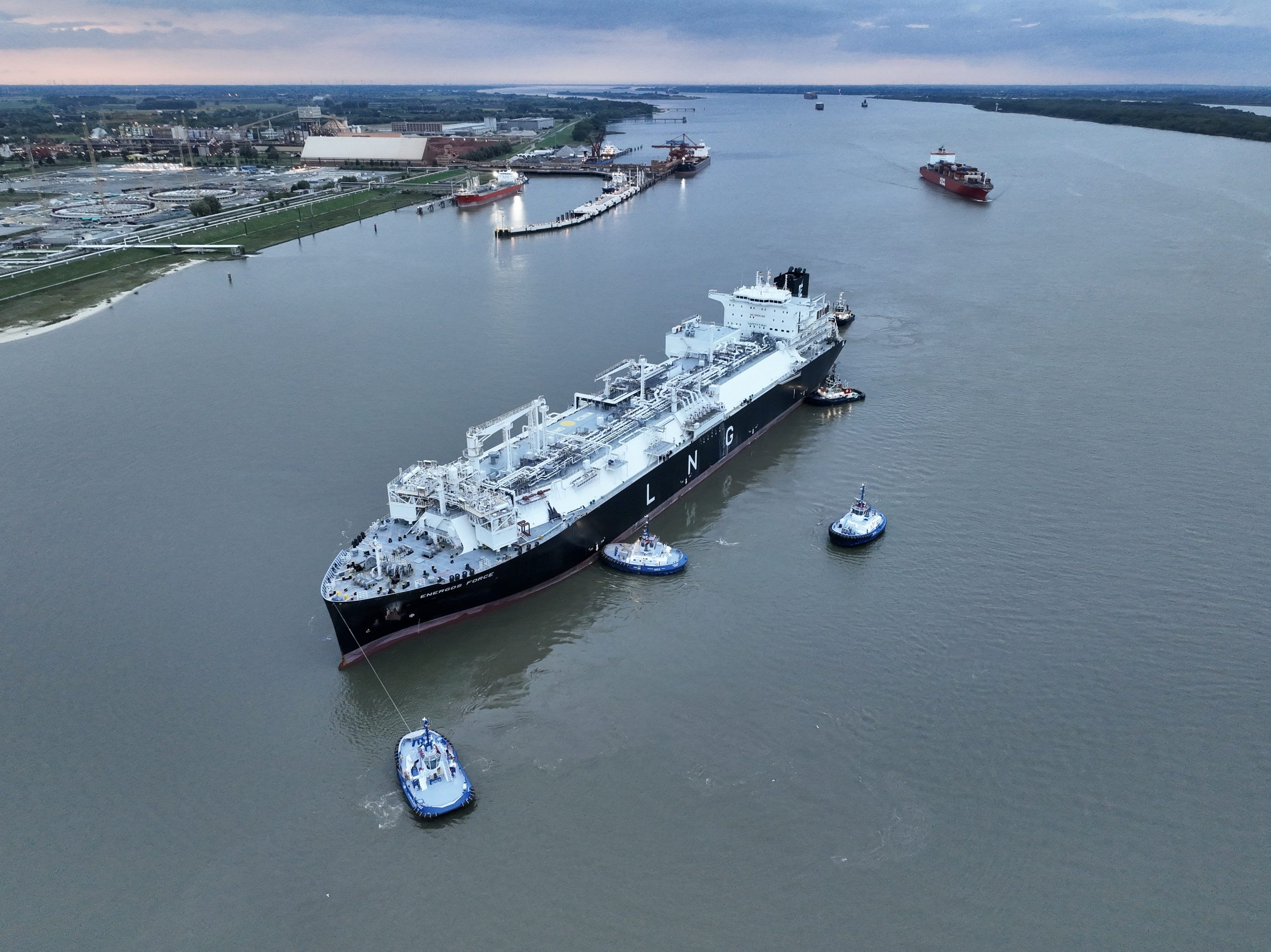
Energos Force arrives in Stade, bringing new LNG infrastructure closer to operation
Energos Force has arrived in Stade, Germany, marking a major milestone in the development of new LNG import infrastructure for...
Read Now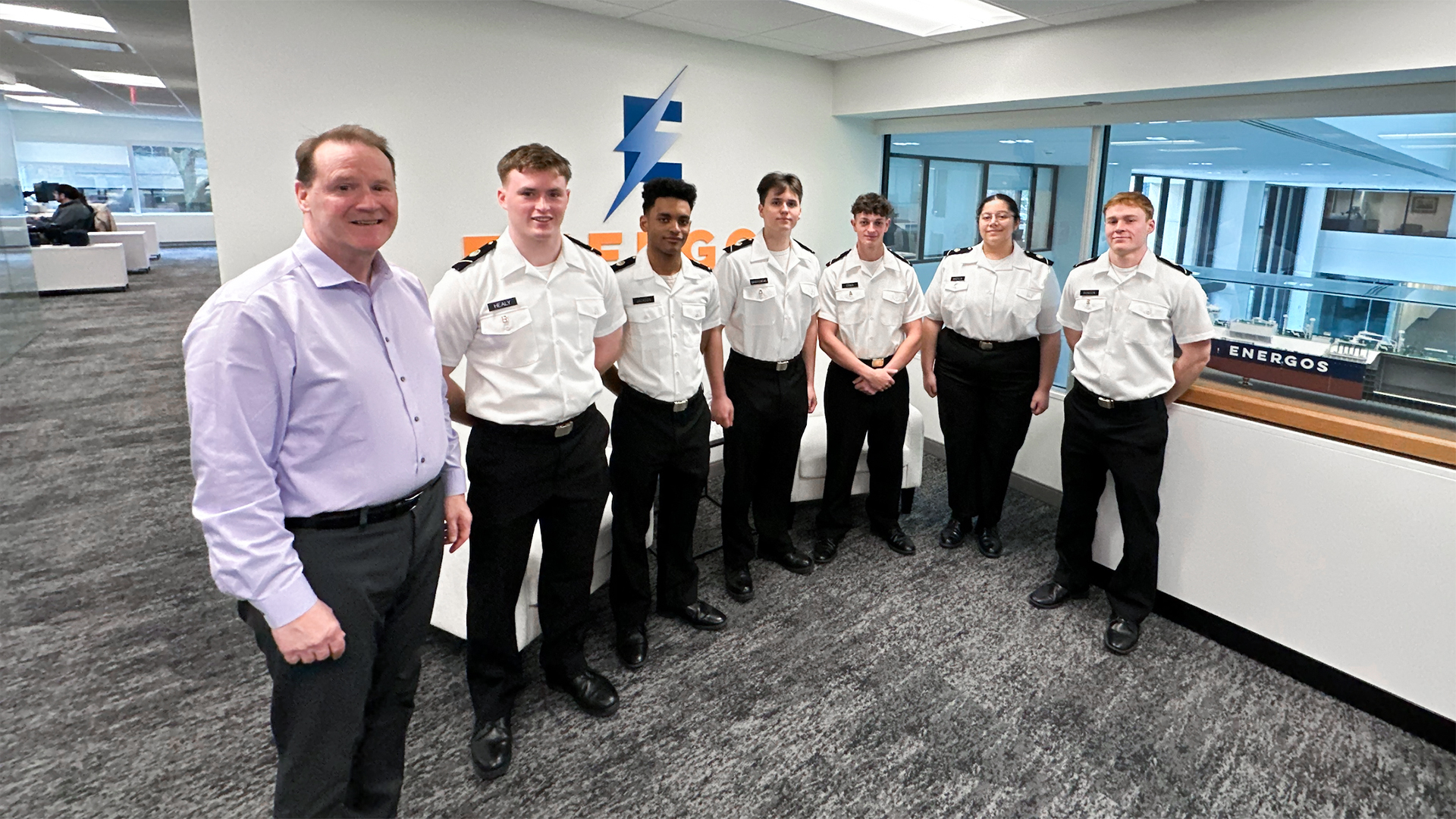
Developing the Next Generation: Energos Infrastructure Welcomes USA Maritime Cadets Ahead of At-Sea Training
Energos Infrastructure recently welcomed a group of U.S. maritime cadets to its Stamford, Connecticut headquarters, ahead of their upcoming 90-day...
Read Now
FSRU Fleet Availability and Update
As global LNG production continues to expand and countries evaluate LNG import solutions to strengthen energy security, Energos Infrastructure is...
Read Now